
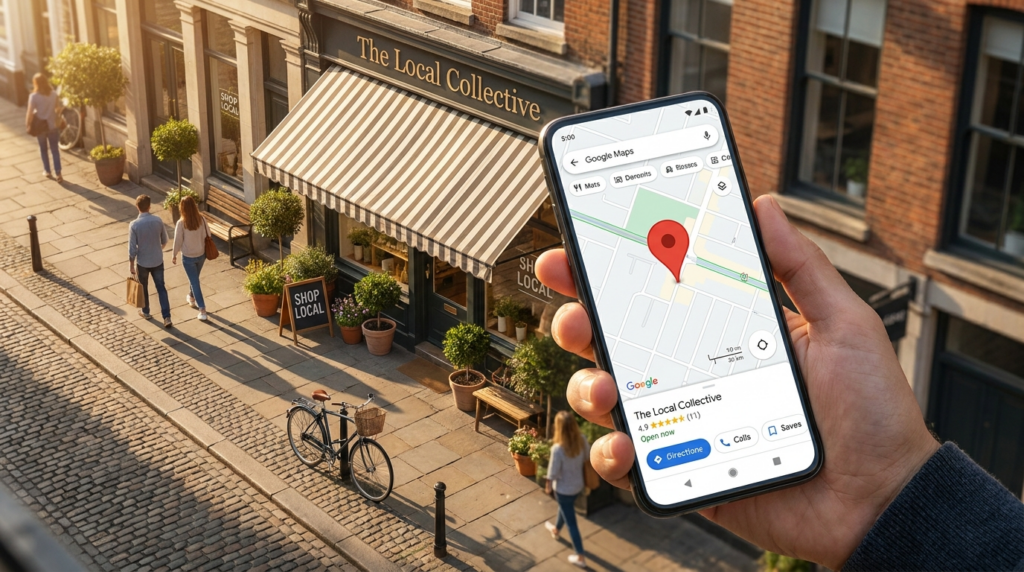
When a potential customer searches for “plumber near me” or “best bakery in [your town],” your website is either showing up—or it isn’t. There’s very little middle ground in local search, and in 2026 the stakes are higher than ever. Google’s local results are increasingly powered by AI, zero-click answers are eating into traditional organic traffic, and businesses that haven’t invested in local SEO are becoming invisible to the customers right down the street.
The good news? WordPress gives small business owners a powerful foundation for local search visibility. The platform’s flexibility with plugins, structured data, and content management makes it one of the best tools available for building a strong local presence—if you know where to focus your effort.
This guide breaks down the local SEO strategies that matter most right now, with specific steps WordPress site owners can take today.
Why Local SEO Deserves Your Attention in 2026
Local search has always been important for brick-and-mortar businesses and service providers, but several shifts in 2026 make it more critical than ever. Google’s AI-powered search results now generate local recommendations directly in the search interface, often pulling from Google Business Profiles and well-structured website content without the searcher ever clicking through to a website. If your business information isn’t optimized for this new landscape, you may not even appear in the conversation.
At the same time, voice search and AI assistants continue to grow. When someone asks their phone or smart speaker for a recommendation, the answer typically comes from local search data. Businesses with complete, accurate, and well-optimized local profiles are the ones getting recommended.
The competitive landscape has also shifted. Local Services Ads (LSAs) are expanding into more industries, and the traditional local 3-pack is becoming harder to crack without a deliberate strategy. Simply having a website and a Google listing is no longer enough—you need both working together, reinforced by consistent signals across the web.
Start with Your Google Business Profile
Your Google Business Profile (GBP) is the single most important asset in local SEO. It’s what appears in the map pack, in AI-generated local recommendations, and often in the knowledge panel when someone searches your business name. In 2026, Google has turned GBP into something closer to an AI-powered local marketing platform, rewarding businesses that actively engage with it.
A fully optimized profile means more than just filling in your address and phone number. Here’s what a competitive GBP looks like right now:
- Complete every field. Business hours, service areas, attributes (like “women-owned” or “wheelchair accessible”), and a detailed business description that naturally includes your key services and location.
- Post regularly. Google Business Profile posts—updates, offers, events—signal that your business is active. Aim for at least one or two posts per week.
- Respond to every review. Positive or negative, every review response demonstrates engagement. Google’s algorithm considers review velocity and response patterns when ranking local results.
- Add photos and videos consistently. Businesses with recent, high-quality images get significantly more clicks and direction requests than those with outdated or no photos.
- Use the Q&A section proactively. Don’t wait for customers to ask questions. Populate the Q&A with common questions and helpful answers to control the narrative.
Your GBP and your WordPress website should reinforce each other. Make sure your business name, address, and phone number (NAP) are identical in both places—down to the formatting.
Structured Data: Speaking Google’s Language
Structured data (also called schema markup) is code added to your website that helps search engines understand exactly what your business does, where it’s located, and what services it offers. In 2026, structured data has become even more important because AI search engines rely on it heavily to generate answers and recommendations.
For WordPress sites, implementing structured data is straightforward thanks to several well-maintained plugins. Yoast SEO, Rank Math, and Schema Pro all offer local business schema options that don’t require touching code. At minimum, a local business website should include:
- LocalBusiness schema (or a more specific type like Restaurant, Plumber, or LegalService) with your name, address, phone number, hours, and geo-coordinates.
- Service schema for each service you offer, linked to your service area.
- Review/AggregateRating schema if you display testimonials on your site (this can enable star ratings in search results).
- FAQ schema on pages where you answer common customer questions.
After implementing schema, validate it using Google’s Rich Results Test or Schema Markup Validator. Errors in structured data can actually hurt your visibility rather than help it, so testing is essential.
Build Hyper-Local Content That Ranks
One of the biggest local SEO trends in 2026 is the shift toward hyper-localization. Google’s algorithm now rewards businesses that demonstrate genuine involvement in specific neighborhoods and communities—not just cities or regions. This is where WordPress really shines, because creating and organizing content is what the platform does best.
Hyper-local content goes beyond simply mentioning your city name on every page. It means creating content that’s genuinely relevant to the people in your area. Consider building dedicated pages or blog posts around topics like:
- Neighborhood-specific service pages (“Plumbing Services in [Neighborhood Name]”) that describe the unique needs or characteristics of that area.
- Local guides or resources that tie your expertise to the community (“A Homeowner’s Guide to Winter-Proofing Your [City] Home”).
- Coverage of local events, partnerships, or community involvement that naturally demonstrates your connection to the area.
- Case studies featuring local clients (with their permission) that include location-specific details.
The key is authenticity. Search engines—and especially AI-powered search—are getting better at distinguishing between genuinely local content and pages that simply stuff a city name into a template. Write content that a local resident would find useful, and the search visibility will follow.
On-Page Essentials for Local WordPress Sites
Beyond content and structured data, there are several on-page elements that directly impact local search performance. These are WordPress-specific optimizations that any site owner or developer can implement:
Title tags and meta descriptions should include your primary service and location naturally. “Emergency Plumbing in Corning, NY” is more effective than “Our Services | Company Name.” WordPress SEO plugins make it easy to customize these for every page and post.
A consistent NAP footer across your entire site reinforces your location signals. Use a WordPress widget or a block in your site editor to display your business name, full address, and phone number on every page. Make the phone number clickable for mobile users.
An embedded Google Map on your contact page (and optionally your homepage) provides a strong local relevance signal. WordPress makes embedding a map as simple as pasting an iframe code into a block.
Mobile performance matters more than ever. The majority of local searches happen on mobile devices, and Google’s Core Web Vitals—particularly Interaction to Next Paint (INP), the metric that replaced First Input Delay—directly affect rankings. A WordPress site that loads slowly or responds sluggishly on mobile is actively losing local search visibility. Choose a lightweight theme, optimize images, and use a caching plugin to keep performance sharp.
Internal linking between your service pages, location pages, and blog posts helps search engines understand the relationship between your content and strengthens the local relevance of your entire site. When you write a blog post about a local topic, link it back to the relevant service page, and vice versa.
Citations and Backlinks Still Matter
Citations—mentions of your business name, address, and phone number on other websites—remain a core ranking factor for local SEO. Consistency is the name of the game: your NAP information should be identical across your website, Google Business Profile, Yelp, Facebook, industry-specific directories, and the local Chamber of Commerce listing.
Inconsistent information confuses search engines and can actively suppress your rankings. If your business has moved, changed phone numbers, or updated its name at any point, an audit of existing citations should be a priority. Tools like BrightLocal or Moz Local can help identify and fix inconsistencies, though manual review of the most important directories is also worthwhile.
Local backlinks—links from other websites in your community—are also powerful signals. Sponsoring a local event, partnering with a nearby business, contributing a guest article to a local news outlet, or getting listed in a local resource guide are all effective ways to build relevant, high-quality backlinks that strengthen your local authority.
Tracking Your Progress
Local SEO is not a set-it-and-forget-it effort. Regular monitoring helps you understand what’s working and where to adjust. At minimum, keep an eye on these metrics:
- Google Business Profile Insights: Track how customers find your profile (direct vs. discovery searches), what actions they take (calls, website visits, direction requests), and how your photos perform compared to similar businesses.
- Google Search Console: Monitor which local search queries are driving impressions and clicks to your WordPress site. Watch for trends—are your target location keywords gaining or losing visibility?
- Local rank tracking: Tools that track your rankings for specific keywords in specific geographic locations give you a much more accurate picture than standard rank trackers, which often show national-level results.
Review these metrics monthly and look for patterns. A drop in map pack visibility, for example, might signal a citation inconsistency or a competitor that’s stepped up their optimization efforts.
Putting It All Together
Local SEO in 2026 isn’t about any single tactic—it’s about building a consistent, interconnected web of signals that all point to the same conclusion: your business is real, active, relevant, and located where you say it is. Your WordPress site provides the hub for that effort, while your Google Business Profile, citations, reviews, and local content all reinforce the message.
The businesses that succeed in local search are the ones that treat it as an ongoing practice rather than a one-time project. Start with the highest-impact items—claim and optimize your Google Business Profile, ensure NAP consistency, and add structured data to your WordPress site—then build from there with hyper-local content and community engagement.
Your customers are searching for what you offer, right in your neighborhood. Make sure they can find you.
Comments are closed